
Masonry heaters are clean-burning, efficient and sustainable centerpieces for heating your home. While they may look like conventional fireplaces, masonry heaters have channels inside them that absorb much more of the heat generated by the fire and then give that heat off into the space they are heating over a longer period of time. A well-designed masonry heater is sized so that a 2-3 hour fire in the evening supplies enough heat to the space for it to stay warm until the next evening when it is fired again. Most heaters are used as a house’s primary heat source and do not require electrical power to function. Heaters can include cooking and water heating functions as well.
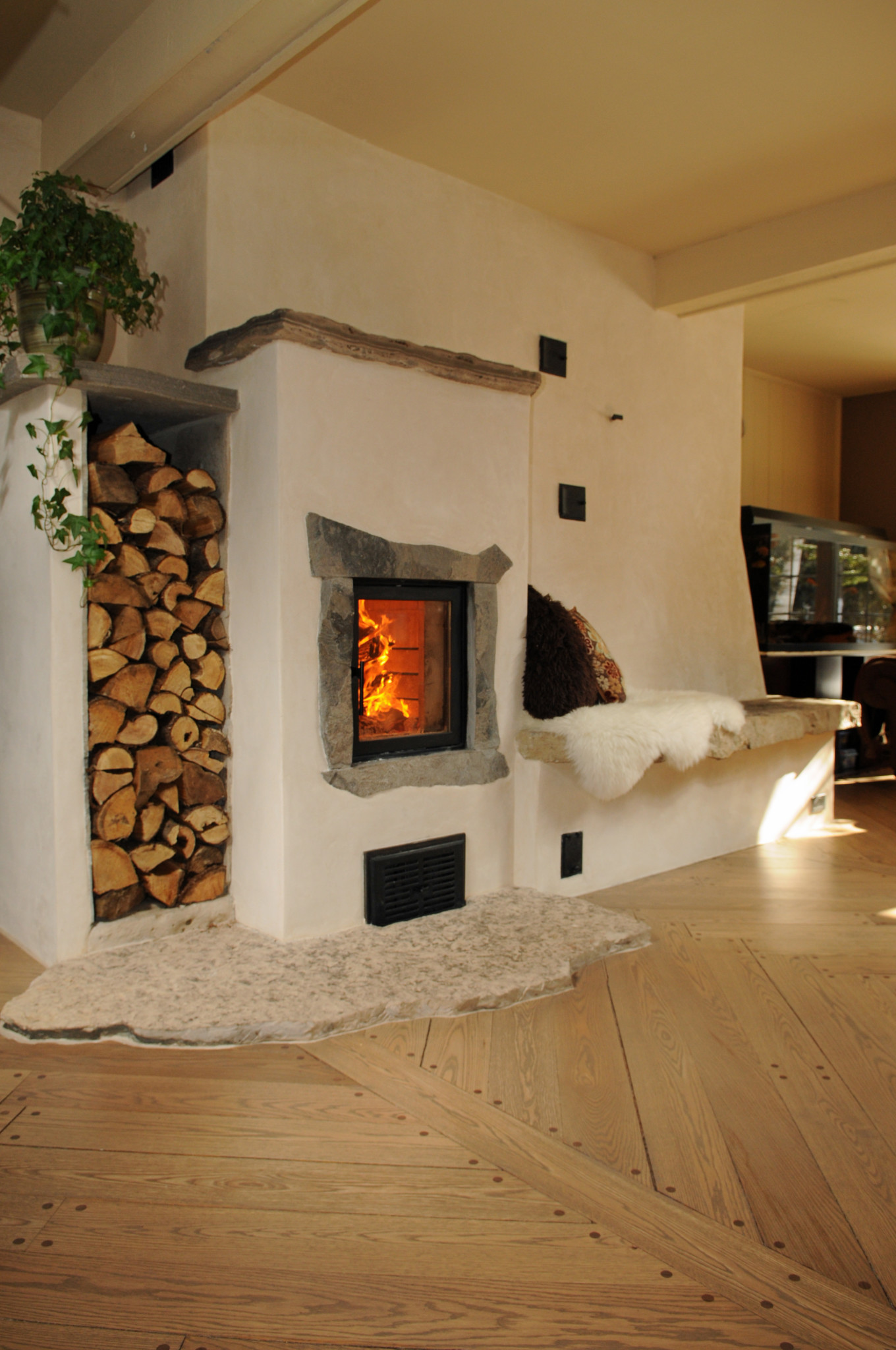
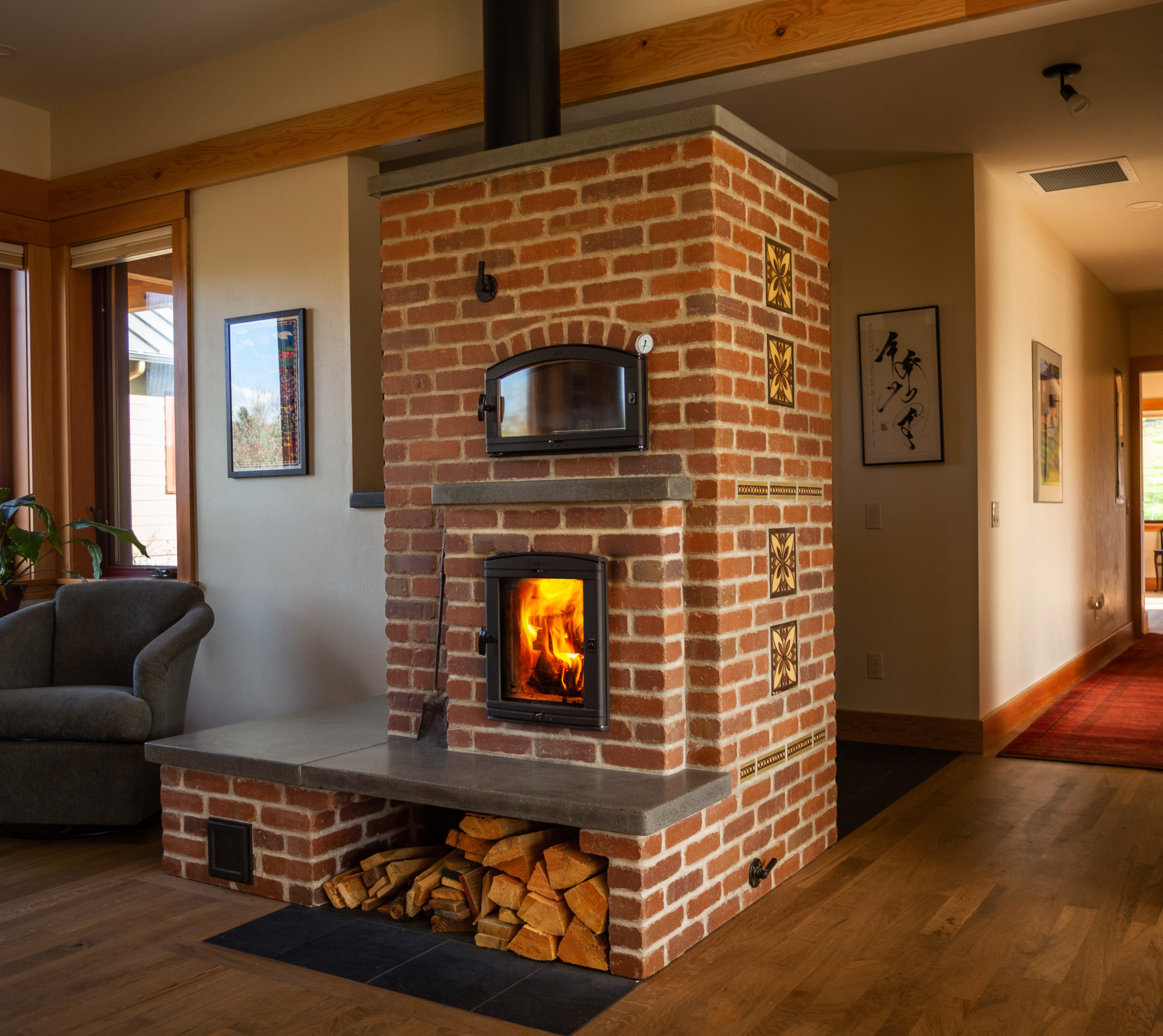
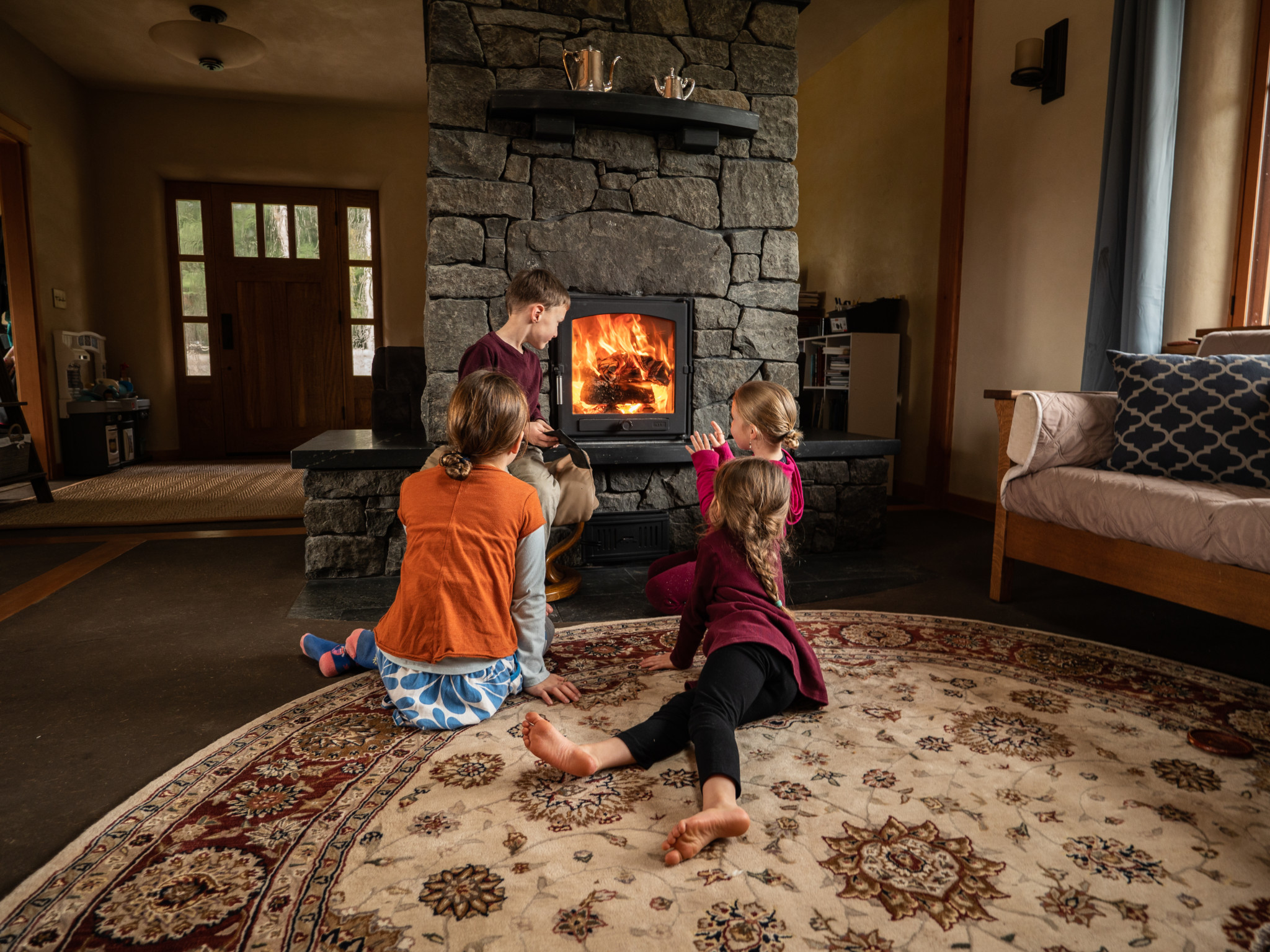
Masonry heaters are also known by the names Russian Stove, Finnish Contraflow, Swedish 5-Run, German Kacheloven, Austrian Calculated Stoves, Russian Bell and Double Bell Heaters. The Rocket Mass Heater and more recently the Batch Box Heater are interesting designs coming out of the innovative DIY realm and being incorporated into the mainstream.
The following is an outline for a complete resource on masonry heaters with linked articles completed:
Overview
- Why Fire? Why Firewood? Why Masonry Heaters?
- Gentle Giants of Healing Warmth
- 2 Kinds of Efficiency – Combustion & Heat Exchange
- The Challenges to Wider Adaption of Masonry Heaters
- Open Source Heater Building
History
Architectural Design
- Locating a Masonry Heater in your Floor Plan
- Staircase Masonry Heaters
- Corner Masonry Heater
- Clearances to Combustibles – see Masonry Heater Codes & Standards
Masonry Heater Core Design
- Design Methodology
- Concept
- Layout
- Sections
- “Brick-by-brick” Design
- Designs
- Five-Run
- Corner Masonry Heater
- Russian
- Contraflow
- Bell
- Rocket
Masonry Heater Construction
- Comparison of Basic Approaches
- Pre-Fabricated / Manufactured
- Core Kits
- Custom
- Hybrid Steel & Masonry
- Foundations
- Outside Air Requirements and Installation
- Hearth Extensions
- “Double-Skinned” Construction : Core & Facing
- Chimneys
- Masonry Heaters & Construction Codes
- Budget
Resources & Next Steps
- Organizations
- Recommended Reading
- Workshops