Whether you are homeowner looking for the most resilient and efficient way to heat your home with a renewable fuel source, a designer looking to provide comfort for your clients, or a mason looking to add masonry heaters to your repertoire, it is helpful to understand how masonry heaters work….

(Please note that while social media is riddled with AI generated images of gas flow that may look similar, every line in these drawings is made intentionally experienced heater builders and the whole design is backed by products which make it feasible)
Extending Gas Flow in a Masonry Heater
(aka The Long Route to Freedom)
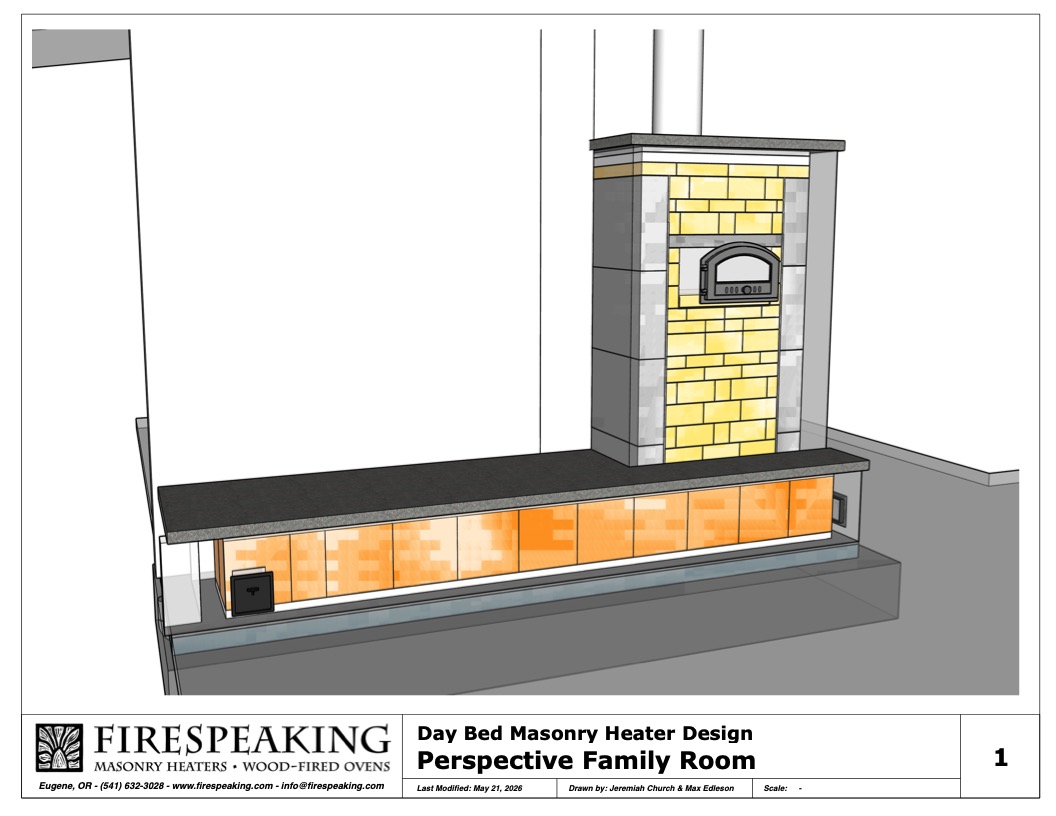
When gases are heated, they become less dense and more buoyant. A chimney is a vertical column where these warm, lighter gases are concentrated. This produces an upward flow, often referred to as “draft”, which leaves a vacuum in its trail. While this principle has been used for centuries to vent fireplaces and wood stoves, what sets masonry heaters apart is the fact they use draft in the chimney to pull heated gases through a longer pathway where more heat can be extracted before escaping up the chimney. It turns out that it is possible to direct gases around cooking ovens and even downwards through heated benches as long as draft in a chimney is maintained at the end of the system. This natural phenomenon is similar to the forces at work in a naturally siphoning hose which is able to be draw water uphill for part of its trajectory as long as its final exit is downhill. This ability to draw gases through a longer heat exchange pathway including horizontal and vertical runs before exiting the chimney can be referred to as a thermasiphon… and gives substance to the heater builder’s creed: “We make pretzels out of chimmneys!” (…We also make chimneys to make pretzels in!)

A Radiant Heat Source / A Thermal Battery
Since these extended channels are made of masonry materials with mass, they act as a thermal battery which store the heat generated and radiates it into the home long after the fire has gone out. Ideally, a masonry heater will keep a residence warm for 24 hours with one 2-3 hour firing per day. This obviously depends on the specifics of the building being heated. It is typical that on the coldest days that a heater be fired twice a day to increase the overall BTU output.
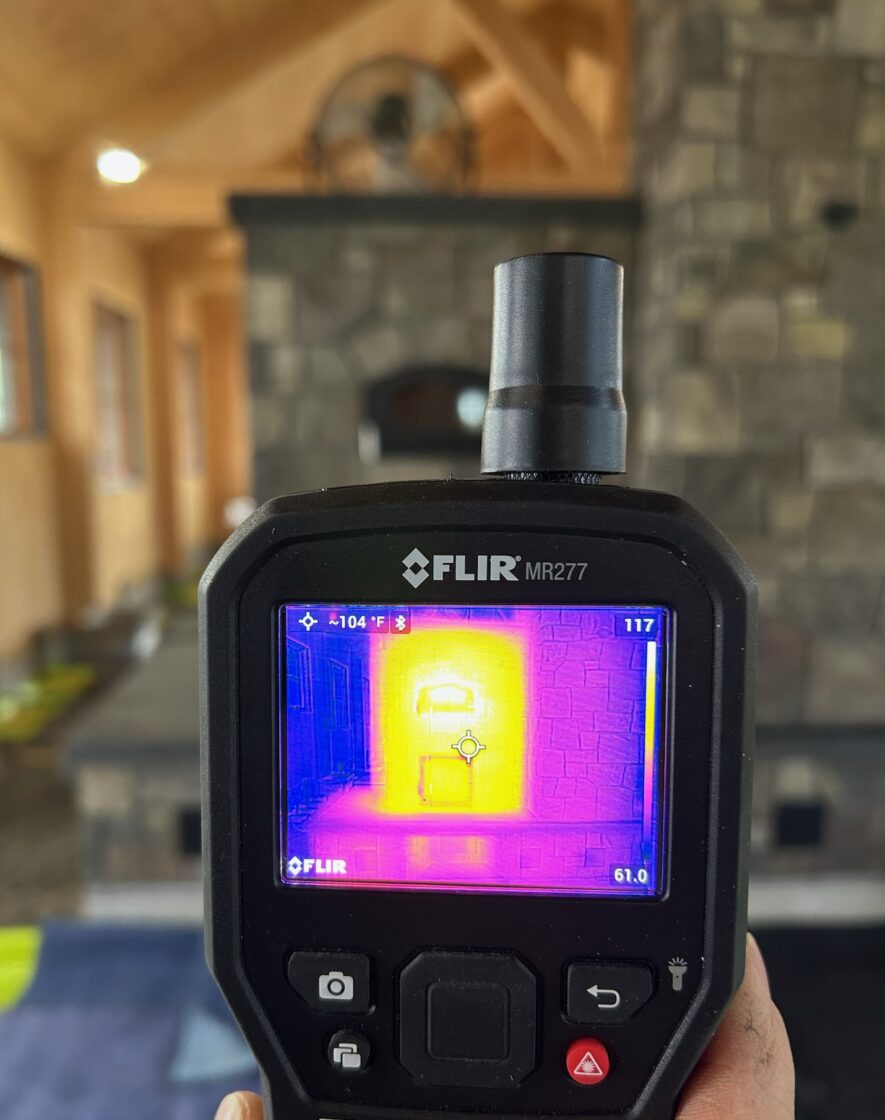
Photo by Kaufman Masonry Inc.
Optimized Combustion
Combustion is a Chain Reaction which is optimized with the correct mixture of primary and secondary air.
At the beginning of a fire, mostly primary air from the grate is required to ignite and build the chain reaction. Once the fire has grown to a critical mass and rapid gasification of the fuel is occuring, studies have shown that administering mostly secondary air provides the best mixture of fuel and air for the cleanest combustion. Designs like this one provide a primary air damper which allow you to regulate the balance of primary and secondary air.
Masonry heaters have been tested to emit as little as 1-2 g/kg of particulate which is on par with the cleanest pellet stoves.

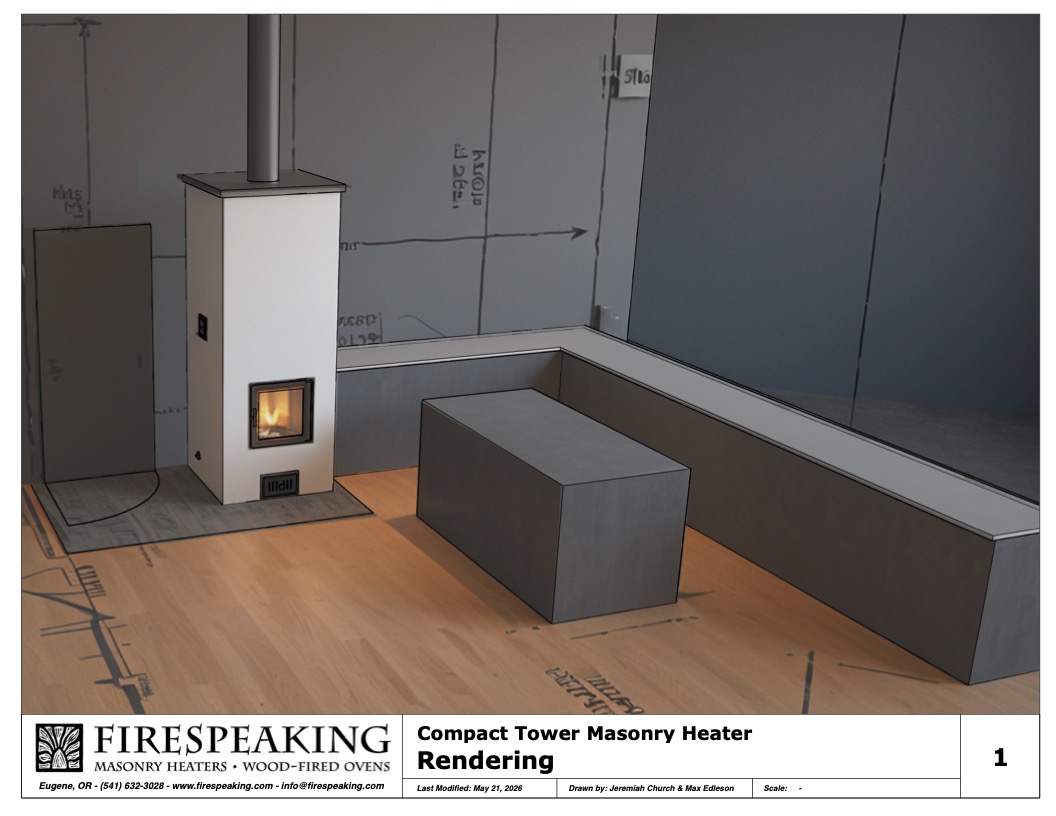
This article features our standard masonry heater design called the 5-Run with Oven (5RO) to illustrate these principles. It is a compact and efficient model with a lot of design flexibility to adopt it to your architecture. It is not just a conceptual model but a fully developed design and we offer all of the specialty products that you need to build it.